Q3 2026 Market Review
Markets remained positive in the third quarter, but investors became more cautious as interest rates rose and some of the enthusiasm around artificial intelligence stocks cooled.
Third Quarter 2026 Market Review
Markets remained positive in the third quarter, but investors became more cautious as interest rates rose and some of the enthusiasm around artificial intelligence stocks cooled.
The S&P 500 reached new highs during the summer before giving back some gains late in the quarter. It still finished up 2.3%, while the Nasdaq gained 2.6%. AI-related companies continued to support the market, although many pulled back as investors began questioning how quickly AI development and profits can continue to grow. quarterly-review-cautious-inves…
International markets also posted modest gains. Developed markets outside the U.S. rose 0.9%, while emerging markets declined slightly during the quarter. Even so, emerging markets remained one of the strongest areas of the market for the year, helped by semiconductor companies in Taiwan and South Korea that are benefiting from AI-related demand. This illustrates why maintaining global diversification can be valuable: market leadership can come from unexpected places. quarterly-review-cautious-inves…
Interest Rates Moved Higher
The Federal Reserve raised short-term interest rates in September, bringing the federal funds rate to 3.75%–4.00%. At the same time, the 10-year Treasury yield climbed above 5%, its highest level in more than two decades. Higher rates hurt bond prices during the quarter, with the broad U.S. bond market falling about 3.5%. quarterly-review-cautious-inves…
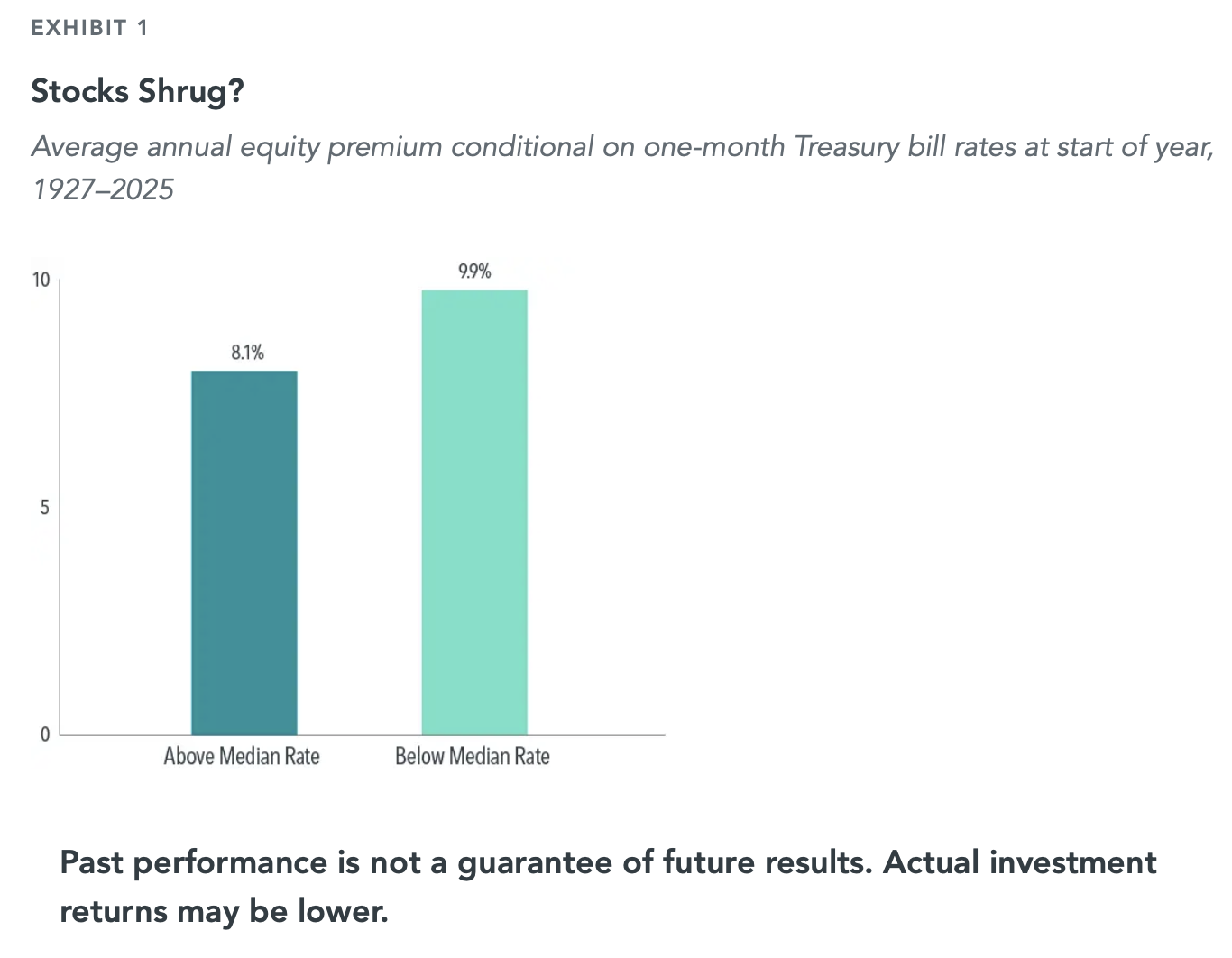
With bonds now offering more attractive yields, some investors may wonder whether they should move money out of stocks. Historically, however, the additional return investors have earned from owning stocks has not depended heavily on whether interest rates were high or low. The chart on page 3 shows that stocks historically produced a similar long-term premium over Treasury bills in both higher- and lower-rate environments. quarterly-review-cautious-inves…
Other Concerns: Oil and Government Debt
Oil prices rose as tensions with Iran increased concerns about supply through the Strait of Hormuz. However, the U.S. economy is less dependent on imported oil than it once was, which could make today's economy somewhat less vulnerable to oil-price shocks. quarterly-review-cautious-inves…
U.S. government debt also surpassed $40 trillion. While that number understandably attracts attention, government debt levels and other widely known risks are already considered by investors and reflected in market prices. The market's perceived risk of a U.S. default has not meaningfully increased in recent years. quarterly-review-cautious-inves…
What This Means for Investors
The quarter provided another reminder that markets can change direction quickly. Technology stocks, interest rates, geopolitical events, and government debt will continue to generate headlines, but reacting to each development can make long-term investing more difficult.
Rather than trying to predict which market, industry, or asset class will perform best next, investors may be better served by maintaining a diversified portfolio and sticking with a long-term investment plan.